Family story 02 / Duyun, Guizhou, China
Untangling more than six centuries of family history.
Reconstructing the Liu family line was an extraordinary genealogical challenge, involving damaged old records, traditional Chinese characters and three distinct branches of the family.
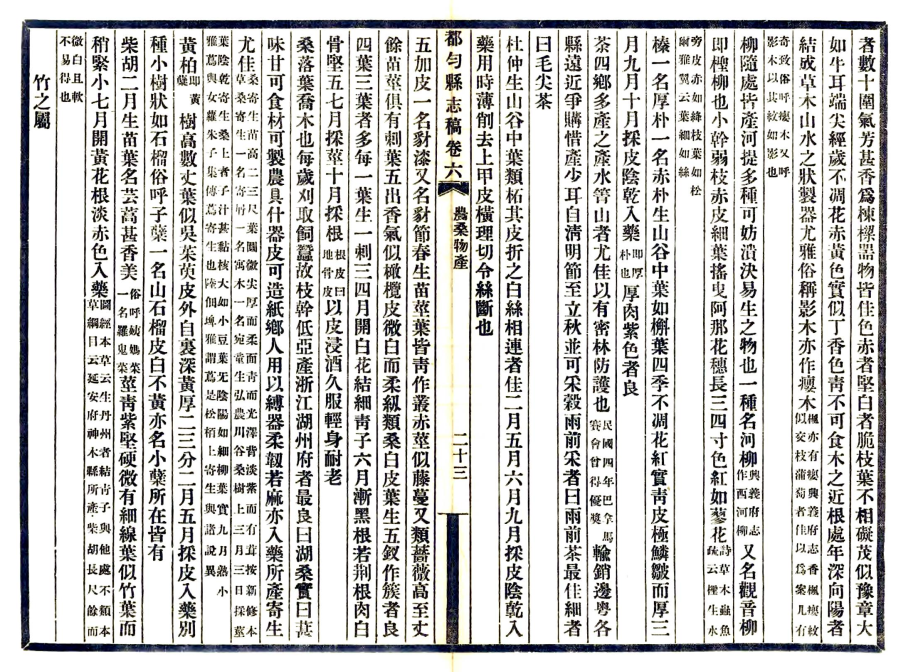
Xiaomei and Gavin spent more than a month comparing traditional genealogies with local Duyun gazetteers. Xiaomei brought her knowledge of traditional Chinese family genealogies (族谱), traditional characters, local histories and family conventions to the task of reading names and relationships across damaged or difficult copies. A former lecturer in English literature at Sichuan Agricultural University, Xiaomei is highly proficient in both Chinese and English. She has also served as a principal of Digital Frontier for approximately 27 years. Her academic training, bilingual skills and decades of professional leadership were especially valuable in interpreting original Chinese sources, checking names and resolving differences between family records rather than relying on translations alone.
The investigation traced the family's documented and traditionally recorded history back to its early Ming-era origins, around 1369. The family records identify 29 relatives successful in the imperial examination system, reflecting a long tradition of scholarship and service.
According to the family's historical account, an early ancestor, Liu Shouyi, served in the military struggle surrounding the end of the Yuan and the establishment of Ming rule. His exact appointment and land rights require careful distinction from later family tradition.
In the poster, Ming-inspired winged headwear gives way to Qing-inspired forms, a visual way to convey the passing of dynasties. The period costumes and early portraits are historical interpretations, not surviving likenesses or proof of an individual's office.
See the Liu family heritage book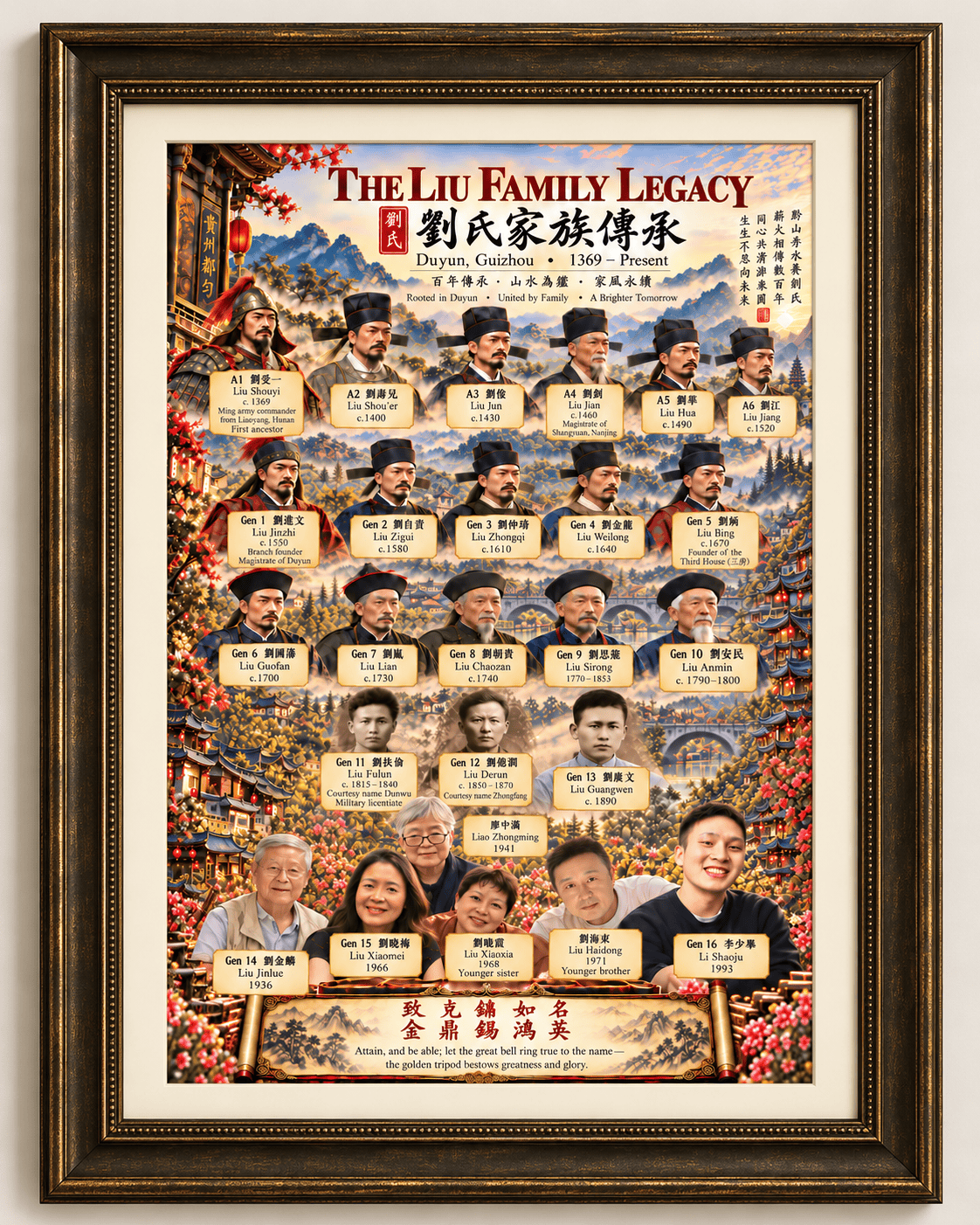
Behind the Liu family discovery
Six centuries of history. One family brought together.
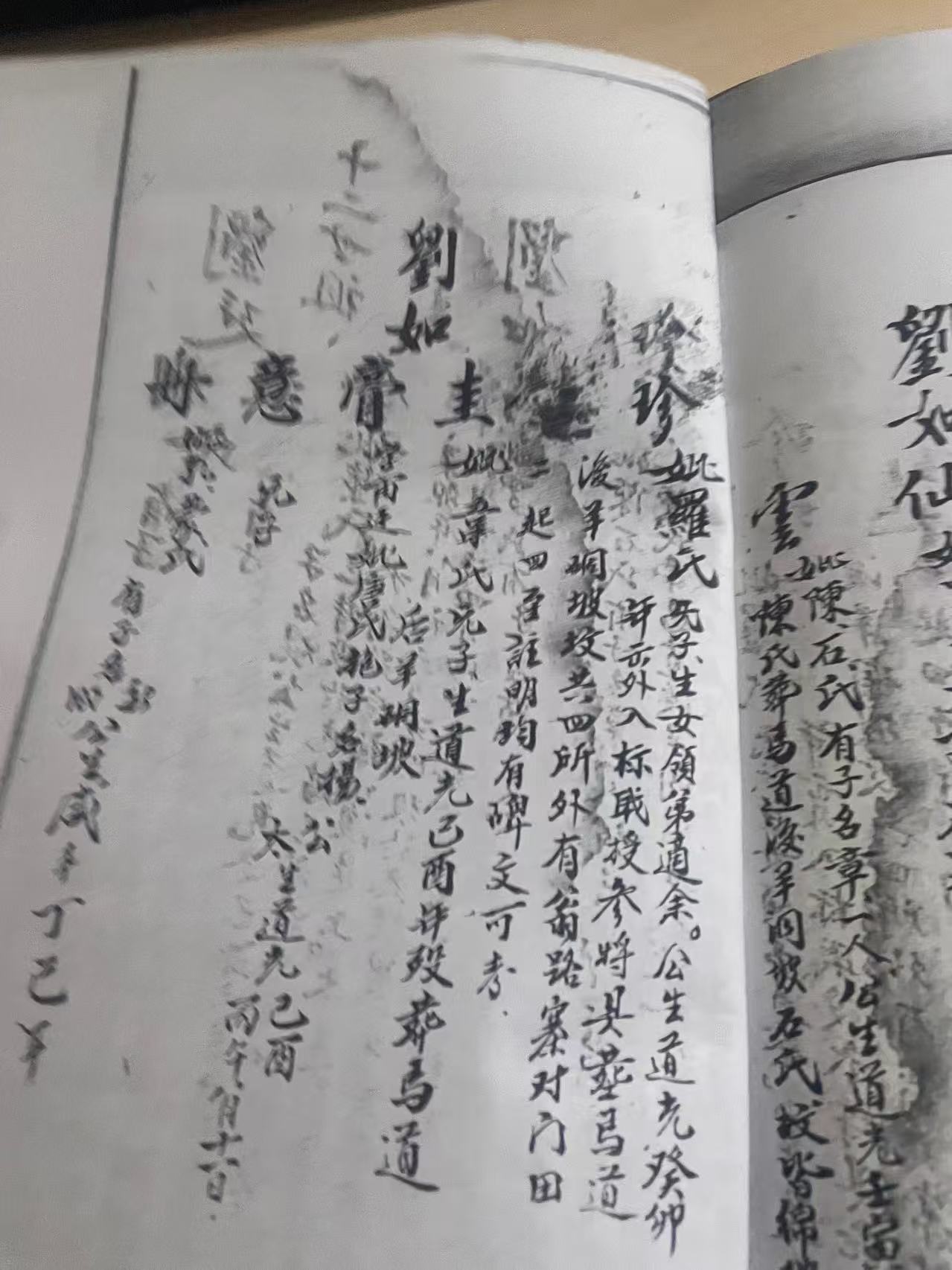
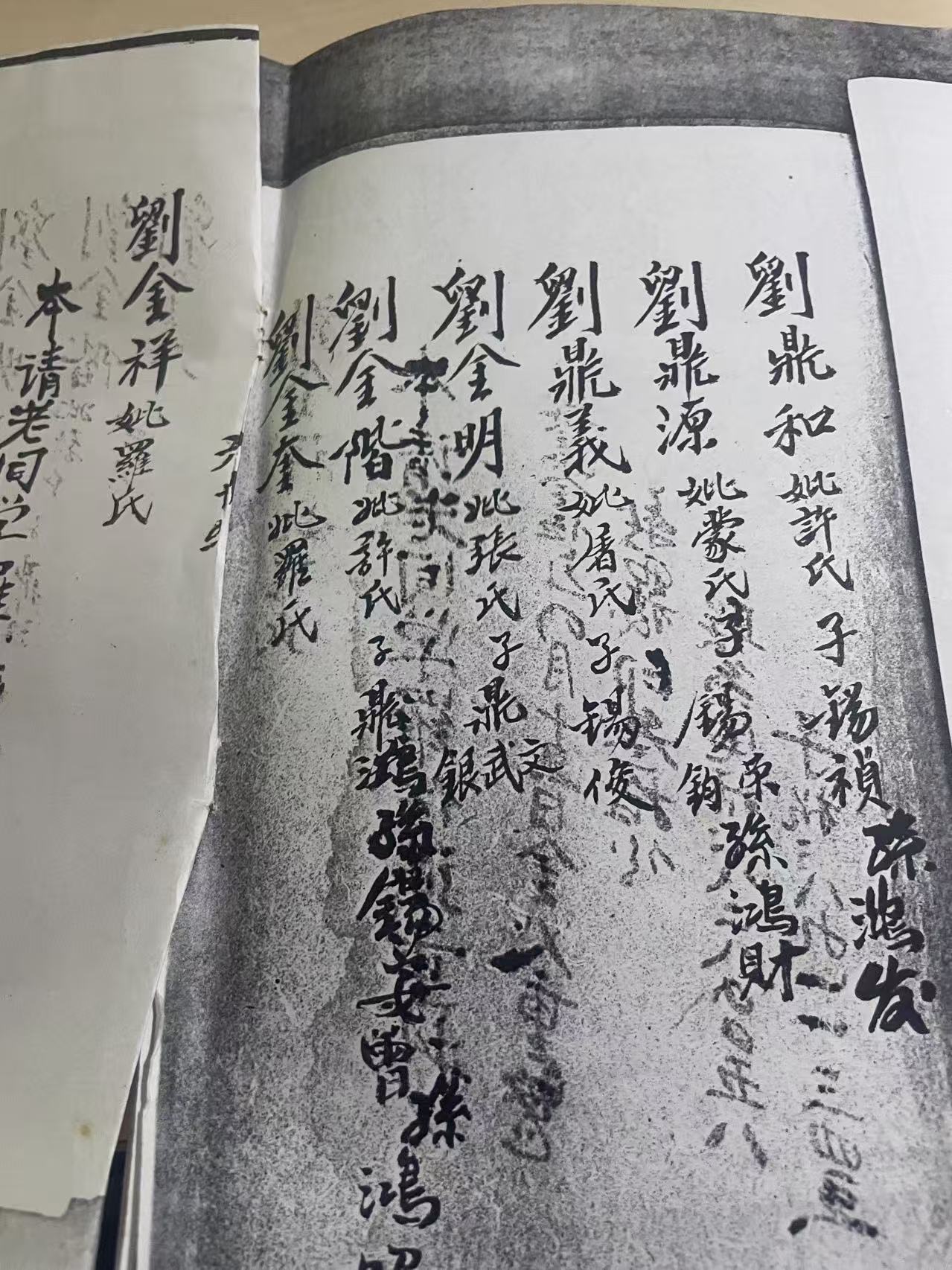
Our Liu family investigation began not with a ready-made family tree, but with fragile records, handwritten genealogies and local histories from Duyun, Guizhou.
Working across multiple sources, we traced generations, compared spellings and Chinese characters, and followed three branches of the family through their shared history.
Reading what time has almost erased.
Some of the historical material survives only as difficult-to-read scans or photographs. Traditional characters, damaged pages, inconsistent naming and the separation of family branches make it essential to consider the records together rather than in isolation.
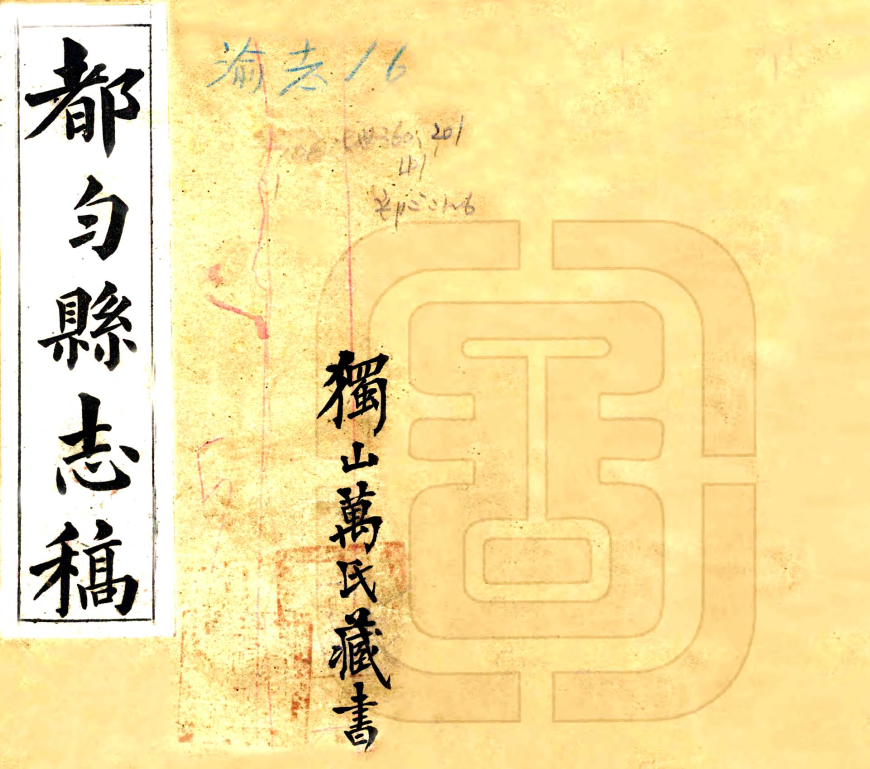
The project drew on Liu family genealogies alongside Duyun gazetteer material. These sources helped reconstruct a lineage whose earliest family tradition reaches back to the Ming period, around 1369.
An early genealogical claim is a clue, not automatically an independently verified fact. Each generation and ancestral name is assessed against the available evidence.
One family name. Many generations. A careful search.
Family genealogies and local gazetteers tell different parts of the story. Comparing them can uncover important connections, illuminate local history and reveal where a traditional account still requires corroboration.
Our work involved checking generational relationships, reconciling personal names and avoiding a common genealogical mistake: treating similarly named individuals as the same person without sufficient evidence.
Beyond the family line, we explored the stories of scholarship, military service, migration and community life preserved in the records, distinguishing family tradition from documentary confirmation.
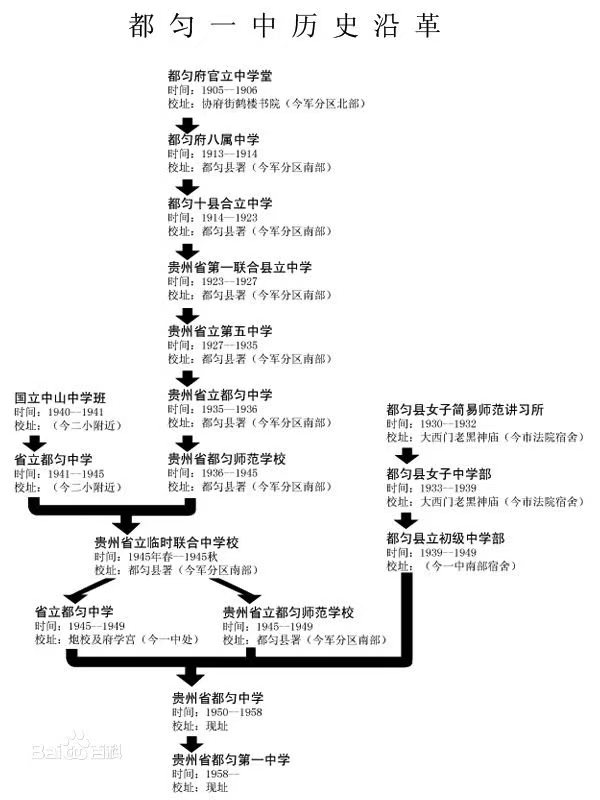
Among the family materials is a record listing school headmasters associated with schools in which the Liu family was involved. It offers a valuable avenue for exploring the family’s connection with local education. Another important item is a stone stele made by a member of the family, believed by the family to date to around 1924.
The people behind the lineage
Liu Guangwen’s family, across generations.
Two treasured family photographs show Liu Guangwen’s family at different stages of life. In the larger group photograph, Madam Yang is seated in the centre; the other photograph shows the family when they were younger. These real family images bring the long genealogical history into living memory.
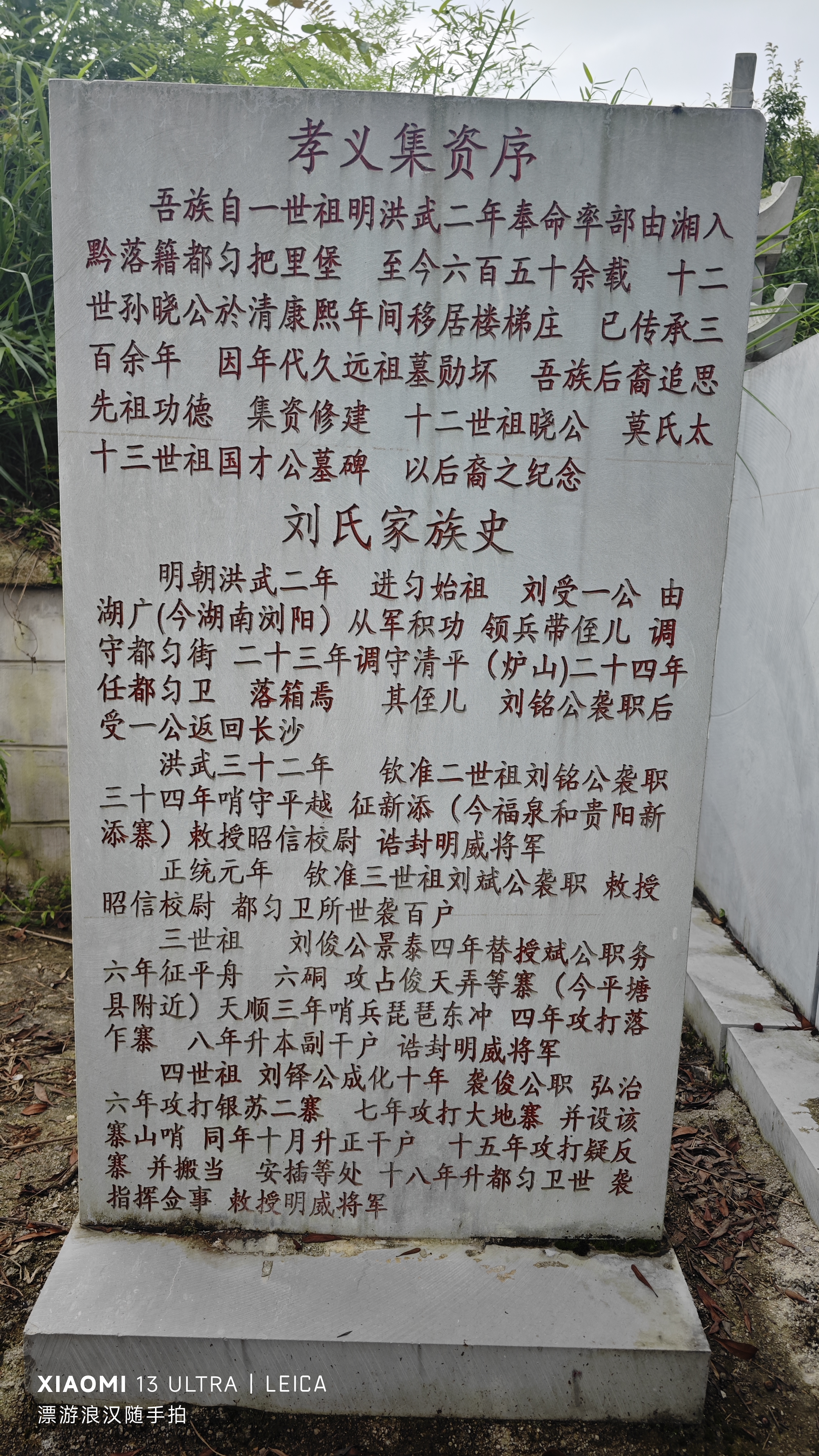
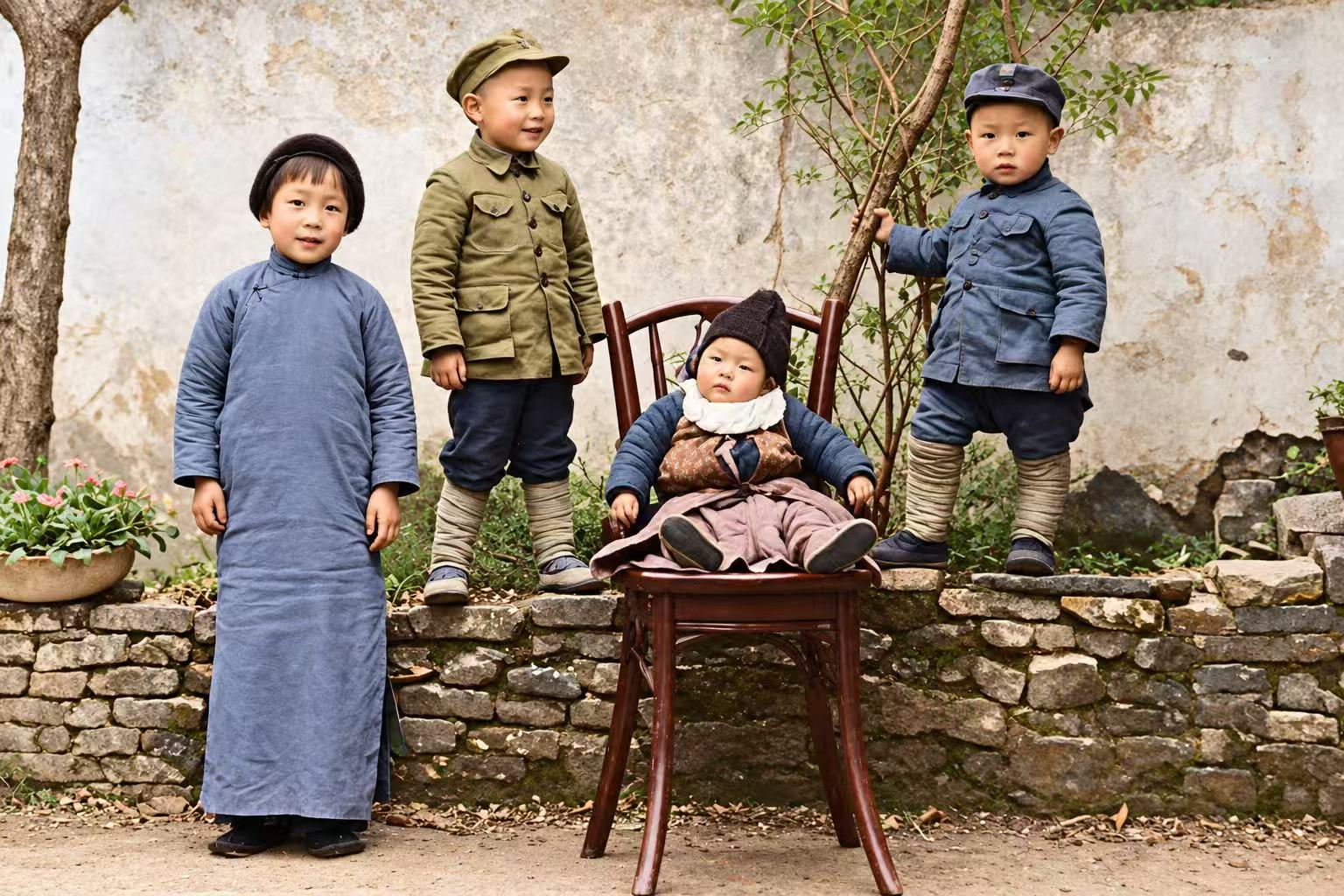
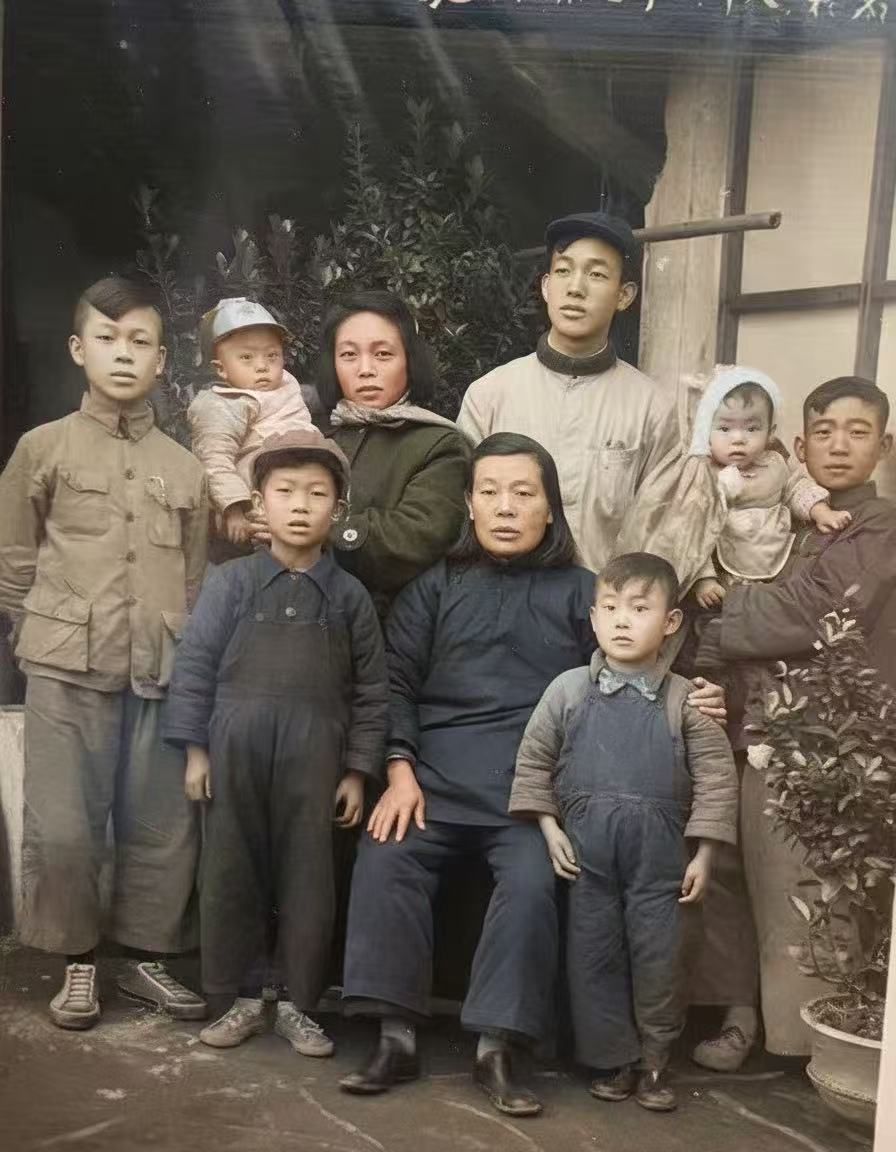
Images and family identifications courtesy of the Liu family. The stele date of approximately 1924 is based on family recollection.
03 / Research becomes an heirloom
A story to read. A legacy to see.
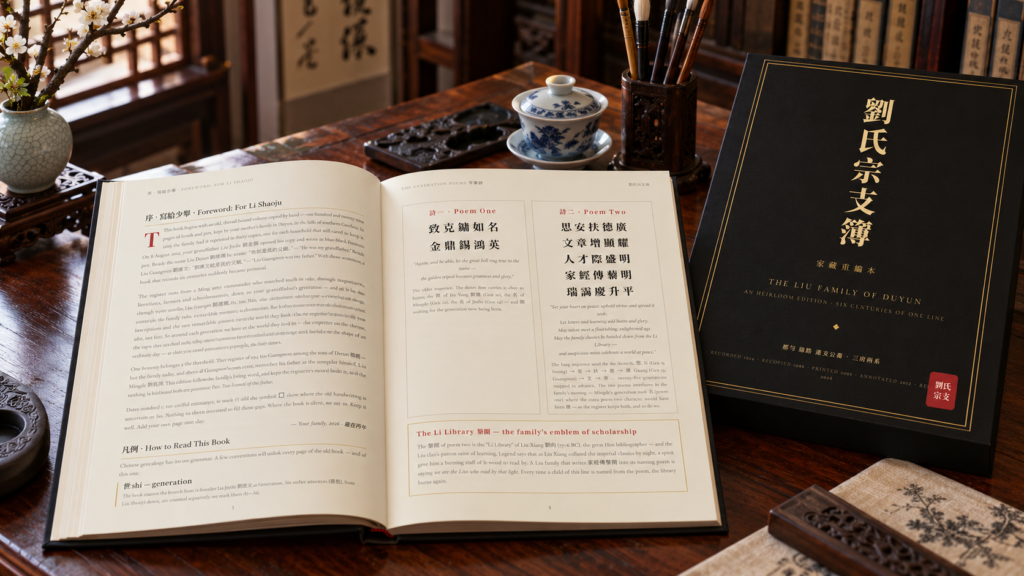
The finished Liu family book and visual artwork bring the researched history into one carefully designed family narrative. Ancestral portraits and early period clothing are artistic reconstructions; the original documents and surviving photographs remain the historical evidence.
Explore the illustrated family books